Parts of a Car Headlight: Anatomy & Components Explained
A headlight isn't one part — it's an assembly of a housing, lens, reflector or projector, a bulb, and sometimes a ballast, halo, and wiring harness, all held in aim by tiny adjuster screws. Here's every component of a modern car headlight, what each one does, how they fail, and which piece you actually need to replace when something goes wrong.
Parts Covered in This Guide

A quick, direct-fit brightness upgrade

A quick, direct-fit brightness upgrade
Clean, flicker-free lighting installs

Upgrading dim halogen headlights on any vehicle
| Product | Owner Reviews | Availability | Best For | |
|---|---|---|---|---|
| 22,538 | In Stock at Amazon | A quick, direct-fit brightness upgrade | ||
| 1,556 | $49.99 In Stock at Amazon | A quick, direct-fit brightness upgrade | ||
| 4,021 | $55.99 In Stock at Amazon | Clean, flicker-free lighting installs | Buy on Amazon
Prime Eligible
| |
| 1,503 | $79.99 In Stock at Amazon | Upgrading dim halogen headlights on any vehicle |
If you’ve ever searched for “parts of a car headlight,” it’s usually because something’s gone wrong and you’re trying to figure out which piece you actually need to buy. A headlight looks like one object, but it’s really an assembly — a stack of components that each do one job, each fail in their own way, and each can often be replaced on their own. Knowing the anatomy is the difference between spending on a bulb and spending on a whole assembly you didn’t need.
This is the complete tour: every part of a modern car headlight, what it does, how it fails, and where to find the replacement — new parts on Amazon, or used/OEM pieces on eBay Motors.
The one distinction that saves you money. “I need a new headlight” almost never means the whole headlight. Nine times out of ten it’s one component — a burned-out bulb, a hazed lens, a stripped adjuster, a bad connector. Diagnose the part before you buy the assembly.
The headlight at a glance
From front to back, a typical headlight is built from these parts:
| Part | What it does | Common failure |
|---|---|---|
| Lens | Clear front cover that protects and transmits light | Hazing, yellowing, cracks |
| Housing | Sealed shell that holds everything and mounts to the car | Cracks, broken tabs, condensation |
| Reflector / projector | Optic that shapes the beam | Burnt/peeling reflector coating |
| Bulb (light source) | Halogen, HID/xenon, or LED that makes the light | Burns out, dims, wrong color |
| Ballast / driver | Powers HID or LED sources | Flicker, no start, color shift |
| Wiring harness & connector | Delivers power to the bulb | Melted plug, corrosion, flicker |
| Adjuster screws | Set vertical/horizontal beam aim | Stripped, seized, snapped |
| Halo / DRL ring | Accent ring or daytime running light | Dead LEDs, uneven glow |
| Gaskets & vent | Seal out water while venting heat | Leaks, internal fogging |
Now the detail on each.
1. The lens
The lens is the clear cover you see from the front. On any car built in the last few decades it’s polycarbonate plastic, not glass — lighter and shatter-resistant, but with one weakness: the factory UV-protective coating breaks down over years of sun exposure, and the surface oxidizes into that familiar cloudy yellow haze that dims your output and dates the whole car.
- If the haze is only on the surface, you don’t need a new light — you need to restore the lens by sanding off the oxidized layer and re-sealing it.
- If the lens is cracked or the fogging is inside the housing, restoration won’t help — that’s an assembly job.
2. The housing
The housing is the sealed shell — usually black plastic with a metallic-backed interior — that everything else lives in. It positions the bulb, holds the reflector or projector, provides the mounting tabs that bolt it to the car body, and works with the lens and gaskets to keep the interior dry.
You replace the housing (i.e., the whole assembly) when:
- A mounting tab has snapped (extremely common in minor front-end taps).
- The housing is cracked or warped.
- The seal has failed and it collects condensation you can’t clear.
For older or discontinued vehicles, a used OEM housing from eBay Motors is often the cheapest way to get a factory-correct shell — the rail at the bottom of this guide points right at complete OEM assemblies and lens/housing covers.
3. The reflector or projector — the optic
This is the part that turns raw bulb light into an aimed beam, and headlights use one of two approaches:
- A reflector bounces light off a mirrored, curved bowl behind the bulb, spreading it across the road.
- A projector focuses light through a lens with an internal cutoff shield, producing a sharp beam with a crisp horizontal edge.
Which one you have decides a lot — especially whether an LED conversion bulb will work well or scatter glare everywhere. Reflector bowls are picky about LED chip geometry; projectors handle LED and HID sources cleanly. Our full Projector vs. Reflector Headlights guide shows you how to tell them apart in five seconds and what each means for upgrades. If you want the projector look with an accent ring, that’s the halo-projector category.
The reflector coating itself can burn or peel from excessive heat (often after running over-wattage bulbs) — and a scorched reflector can’t be repaired, only replaced with a new assembly.
4. The light source (bulb)
The bulb is what most people mean by “the part that’s out.” Three technologies:
- Halogen — the traditional filament bulb; cheap, warm-white, runs directly off 12V, no extra electronics.
- HID / xenon — an arc of light inside a gas-filled capsule; very bright, but needs a ballast (next section). See the hid-xenon category.
- LED — solid-state chips; the modern upgrade of choice for efficiency, color, and lifespan.
Getting the right bulb size matters more than anything here — H11, 9005, H7, H4, 9006 and the rest are not interchangeable. Use our Headlight Bulb Size Reference Chart to nail the fitment before you buy, and Color Temperature Explained to pick the right white. Ready-to-shop bulbs live in the bulbs category, and if you’re weighing technologies, LED vs. HID Headlights settles it.
5. The ballast or driver
Only HID and some LED systems have one. A ballast is a small electronic module that spikes voltage high enough to ignite an HID arc, then regulates it steadily — without it an HID bulb simply won’t light. LED headlights use a driver instead, sometimes built into the bulb body and sometimes as a separate inline box.
If an HID light flickers, shifts color, or won’t strike, the ballast is as likely a suspect as the bulb. HID ballasts and OEM control modules are a natural eBay Motors search — factory D-code parts are often far cheaper used than new.
6. The wiring harness & connector
Power reaches the bulb through the vehicle’s connector and, on many upgrades, an added wiring harness. This is where a lot of post-upgrade problems actually live:
- A melted or corroded connector dims or kills the light.
- LED conversions often trigger flickering or dashboard bulb-out warnings because the car’s CANbus system doesn’t recognize the LED’s low current draw.
The fix usually isn’t a new headlight at all — it’s a CANbus decoder, load resistor, or relay harness. Our Fix LED Headlight Flicker & Error Codes guide walks the full ladder, and the wiring-harnesses category has the parts.
7. The adjuster screws
Behind or on top of the housing sit one or two adjuster screws — typically one for vertical aim and, on some cars, one for horizontal. They’re what let you point the beam correctly, and on older cars they’re notorious for stripping, seizing, or snapping, which lets the beam sag out of aim.
Any time you replace a bulb, swap an assembly, or change ride height, you should re-aim — see How to Aim Your Headlights for the 25-foot wall method. If an adjuster itself is broken, replacement gears and screw kits are cheap and available (the eBay Motors rail below points at OEM adjuster hardware).
8. The halo ring & DRL
Many modern and aftermarket headlights include an accent light: a halo (angel-eye ring around the projector) or a DRL (daytime running light strip) that stays lit whenever the car is on. These are LED-based and can develop dead segments or uneven glow over time. On aftermarket halo-projector assemblies the halo is integrated, so a failed ring usually means replacing the assembly — one more reason to buy a quality unit up front.
9. Gaskets, seals & the vent
The unsung parts. Rubber gaskets and bulb-cap seals keep water out, while a small breather vent (often a rubber tube or membrane on the back) lets the housing equalize pressure and release heat without drawing in moisture. When a seal cracks or a vent gets blocked, you get condensation or standing water inside the lens — which fogs your output and corrodes the reflector. A little morning fog that clears is normal; water that pools or never clears means a failed seal, and that’s an assembly replacement.
Putting it together: which part do you replace?
Work the symptom back to the part:
- Light out, housing fine → new bulb (on HID, check the ballast).
- Yellow, hazy lens → restore or replace.
- Water/fog inside → failed seal → new assembly.
- Flicker or error after LED swap → decoder/harness, not a new light.
- Beam aimed wrong → adjust or replace adjuster screws.
- Cracked lens or broken tab → new assembly.
- Whole unit tired/discontinued → a used OEM assembly from eBay Motors restores everything factory-correct.
Where to get the part
New bulbs, LED assemblies, decoders, harnesses, and restoration kits are an Amazon search away — start with the featured products below and the bulbs, led-headlights, and wiring-harnesses categories. Check current pricing and availability directly on Amazon.
Used, OEM, salvage, and discontinued parts — complete factory assemblies, housings, lens covers, ballasts, and adjuster hardware — are where eBay Motors wins, especially for older or rare vehicles. The rails below search live listings for exactly those parts.
This guide explains the general anatomy of a car headlight for shopping and diagnosis. Specific fitment, wattage, and legality vary by vehicle and region — always confirm the correct part number and any DOT/SAE requirements for your car before buying. See Are LED Headlights Legal? for the compliance side.
Shopping used or OEM? Try eBay Motors
Live listings for the parts covered in this guide — prices set by the seller.
Recommended Parts for This Guide
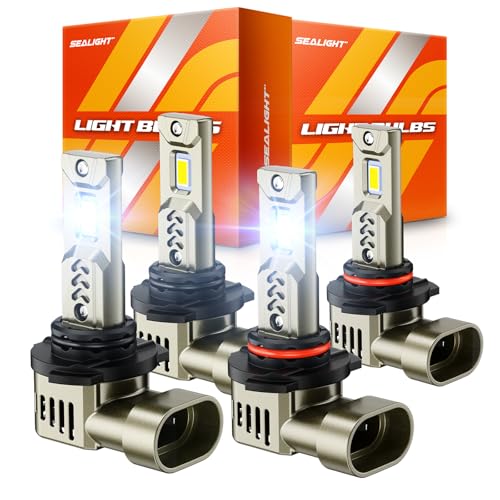
SEALIGHT 9005 H11 Bulbs,100,000LM 900% Brightness HB3 H8/H9 Light Bulbs, 6500K Cool White Bulbs with 15000RPM Fan, Plug and Play ATV/UTV, 10-Year Extended Lifespan IP68 Waterproof, Pack of 4
22,538 owner reviews
SEALIGHT 9005 H11 Bulbs,40000LM 900% Brightness HB3 H8/H9 Light Bulbs, 6500K Cool White Bulbs with 15000RPM Fan, Plug and Play ATV/UTV, 10-Year Extended Lifespan IP68 Waterproof, Pack of 4. A direct-fit replacement headlight bulb — match the size your vehicle needs for a clean, bright upgrade.
- Direct-fit sizing
- Bright upgrade output
Termitor Latest H11 9005 Light Bulbs Combo, 160,000LM High/Low Beam, 85K+ Hours Long Service Life, 6500K Cool White, Real 1:1 Halogen Size H9 HB3 Off-Road Light for Car UTV SUV, Plug N Play, Pack of 4
1,556 owner reviews
Termitor Upgraded H11 9005 Light Bulbs Combo, 100,000LM Super Bright H9 H8 Bulbs, 85000+Hrs Long Life, 1:1 Halogen Fit Plug-N-Play H9 H8 HB3 Off Road Lights, 6500K White, Pack of 4. Halo and projector lighting that adds a sharp, focused beam and a modern signature look to your vehicle.
- Direct-fit sizing
- Bright upgrade output
SEALIGHT 9005/HB3 9006/HB4 LED Bulbs Combo, 1200% Super Bright, 1:1 Mini Size, 10-Year Extended Lifespan with Cooling Fan, 6500K White Canbus Ready, Plug-N-Play, Pack of 4
4,021 owner reviews
SEALIGHT 9005/HB3 9006/HB4 LED Bulbs Combo, 1000% Super Bright, 1:1 Mini Size, 10-Year Extended Lifespan with Cooling Fan, 6500K White Canbus Ready, Plug-N-Play, Pack of 4. Wiring and harness hardware that powers your lighting upgrade cleanly and fixes flicker or error codes.
- Clean power delivery
- Fixes flicker & errors
UNI-SHINE 2PCS 7-Inch LED Headlights - DOT Approved, Hi/Lo Beam, Compatible with Jeep Wrangler, Chevy, and Miata - Plug and Play
1,503 owner reviews
UNI-SHINE 2PCS 7-Inch LED Headlights - DOT Approved, Hi/Lo Beam, Compatible with Jeep Wrangler, Chevy, and Miata - Plug and Play. Brighter, whiter LED output that upgrades your vehicle from dim halogen — longer life, lower draw, and easy plug-and-play install.
- Brighter LED output
- Longer service life